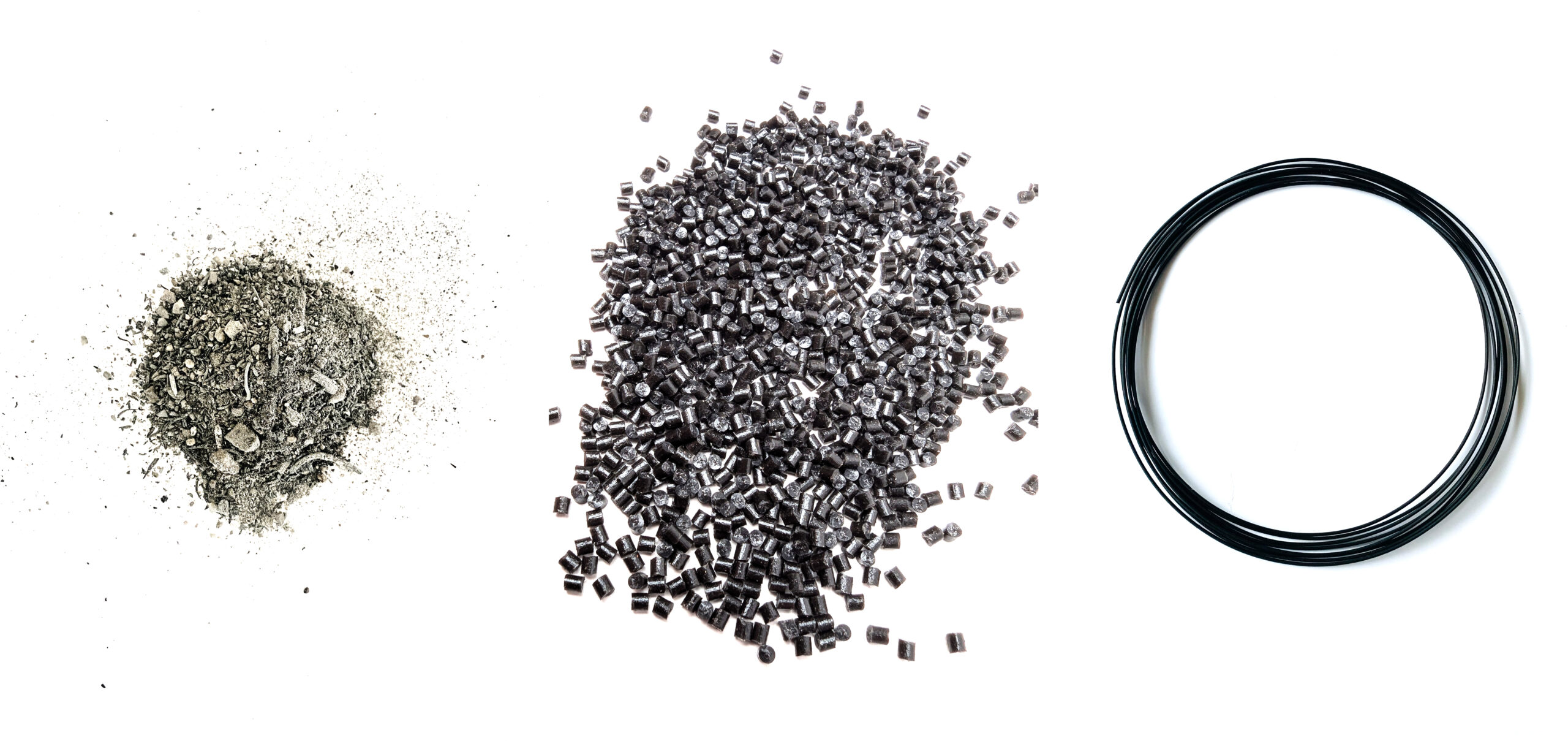
The Smoke Screen was created for the Biennale Architettura di Venezia in response to the call for designing for the climate “as it becomes less forgiving, that dynamic is being taken to a new level. Over the past two years, climate change has accelerated in ways that defy even the best scientific models. 2024 marked a grim milestone, as Earth registered its hottest temperatures on record, pushing global averages beyond the Paris Agreement’s 1.5°C target. And in the fires of Los Angeles, in the floods of Valencia and Sherpur, in the droughts of Sicily, we have witnessed the elements attacking us with unprecedented ferocity. When the knowledge and systems that have long guided our understanding begin to fail, new forms of thinking are needed.” – Carlo Ratti The *Smoke Screen* is 3D printed out of a custom bio-filament made of California wildfire ash and represents a new form of thinking about how we use the devestating byproducts of wildfires. By repurposing wildfire ash, the project not only engages in material reuse but also introduces a form of carbon sequestration. Some types of ash, particularly biomass-derived, have properties conducive to CO₂ capture. The varied chemical composition of wildfire ash—shaped by its specific origin—affects its performance and potential as a carbon-absorbing material.
 Wildfire ash can be converted into a homemade biological-based filament for 3D printing using standard desktop FDM printers and speaks to the practicalities of using bio-digital materials for future building applications such as screens and partitions.
This installation is made of small interlocking wafers that could be transported in a very compact manner with the use of minimal energy in response to the Biennale’s circular economy manifesto.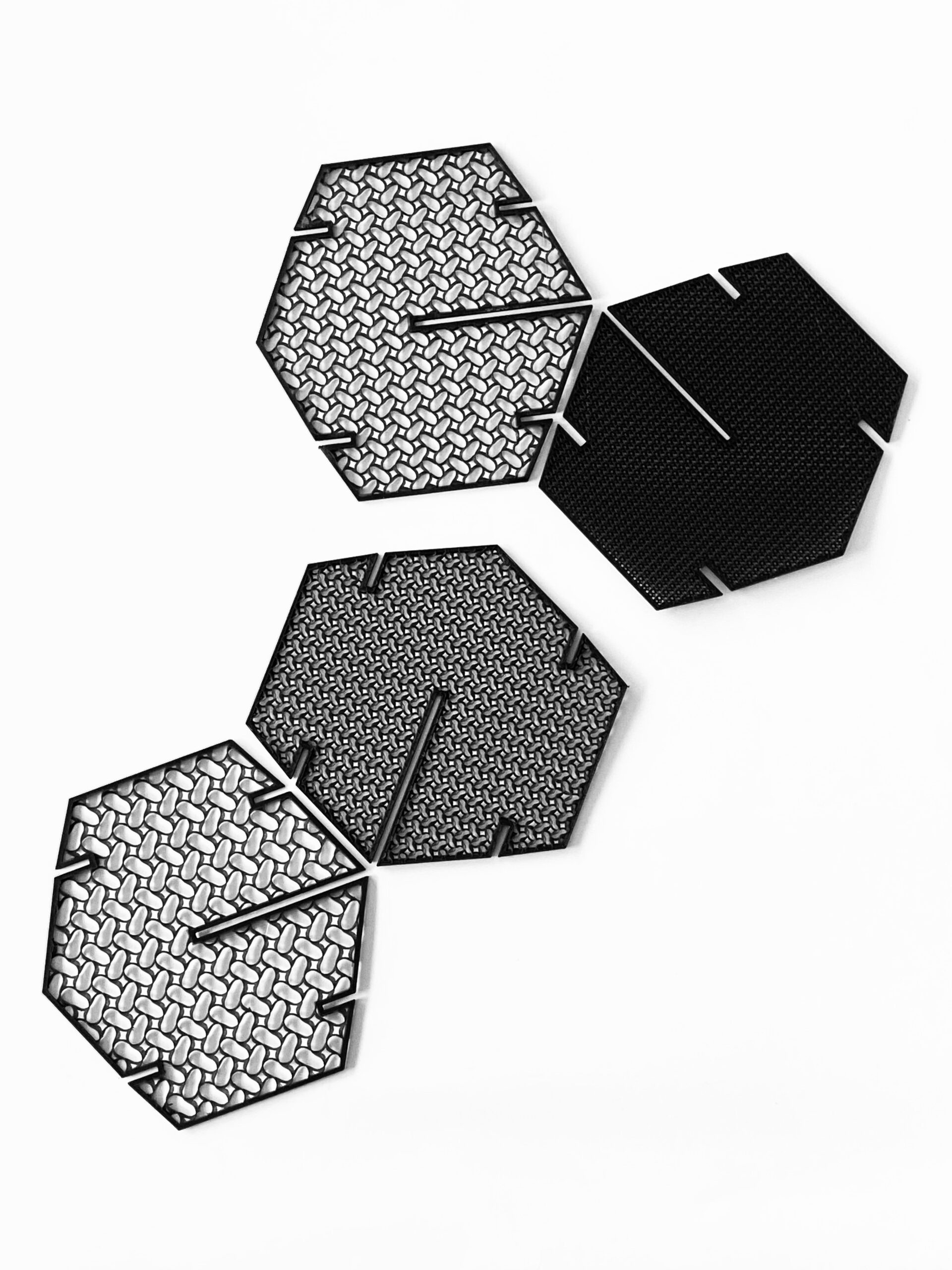 The Smoke Screen raises urgent questions at the intersection of climate change and weather, materiality and memory: Can we rebuild with the remnants of destruction?Can wildfire waste, when combined with emerging technologies, become viable bio-digital construction materials? How can we transform waste into tools for healing, and what artifacts can help us remember what has been lost?
 Project Date: 2025
Project Location: Venice, Italy
Project Team: Virginia San Fratello
Special thanks to San José State University, Protopasta, Scott Uriu, and Doris Sung for supporting this research and installation.
Photography: Lloyd Lee